Address
Aquatec Place 94 Swaniker Street, Abelemkpe Accra Ghana
Call
+233 (0) 30 279 2285 / +233 (0) 034 229 5174
Work Hours
Monday to Friday: 8:30AM - 5:30PM
Address
Aquatec Place 94 Swaniker Street, Abelemkpe Accra Ghana
Call
+233 (0) 30 279 2285 / +233 (0) 034 229 5174
Work Hours
Monday to Friday: 8:30AM - 5:30PM

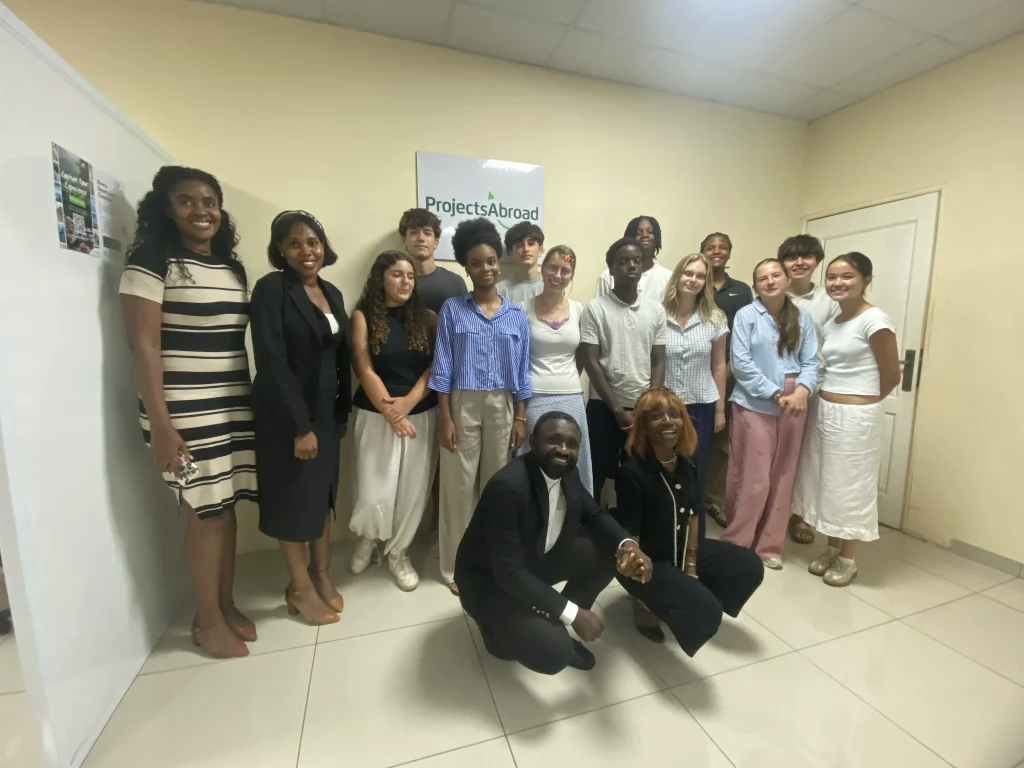
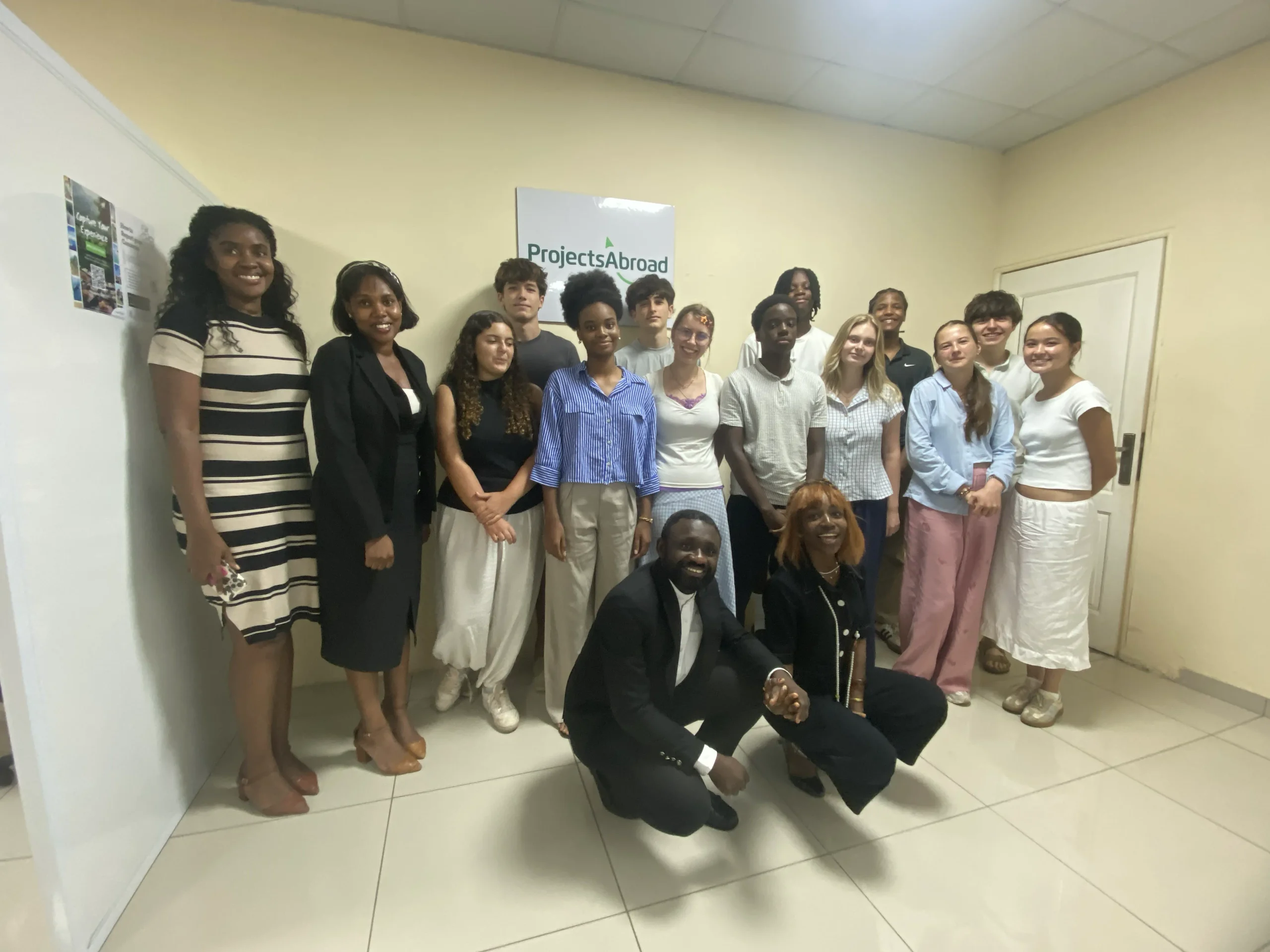
On 27th July 2026, Associates Nana Araba Plange, Haruna Rasheed Mohammed, Susanette Simpson and Practice Development officer Paulina Quartey from Merton & Everett LLP welcomed a group of high school interns from around the world visiting Ghana through Projects Abroad for a workshop titled Human Rights in Ghana: From the Page to the Ground. The session was designed around a simple but often overlooked idea: that having a right written into law is only the beginning of the story, not the end of it.
The afternoon opened with a short exercise called “Rights I Take for Granted.” Each intern shared one right they exercised without a second thought, speaking freely, moving around their city, attending school. This made visible just how much of daily life depends on rights that are rarely thought about until they are taken away.
The first working session moved from the personal to the structural. Interns were reminded that Ghana’s Constitution and its international treaty commitments guarantee an extensive set of rights, but that the real test of any right is whether an ordinary person can actually access, exercise, and enforce it when it matters.
To explore that gap, small groups were each given a scenario drawn from the kinds of cases our firm and others encounter in practice: a person held for weeks without access to a lawyer, a family unable to assert land rights because they cannot afford legal representation, a community whose water source is destroyed by illegal mining with no clear path to remedy, a person turned away from a public institution because of who they are, and the limitations that can be placed on the right to protest.
For each scenario, groups worked through three questions: What right was supposed to protect this person? What actually went wrong? Who held the power in this situation? The debrief that followed drew out a pattern the interns identified themselves, poverty, distance from institutions, a lack of legal literacy, discrimination, and bureaucratic delay show up again and again. The point was not to shock anyone, but to make clear that these are not isolated failures. They are patterns, and patterns can be studied, challenged, and in time, changed.
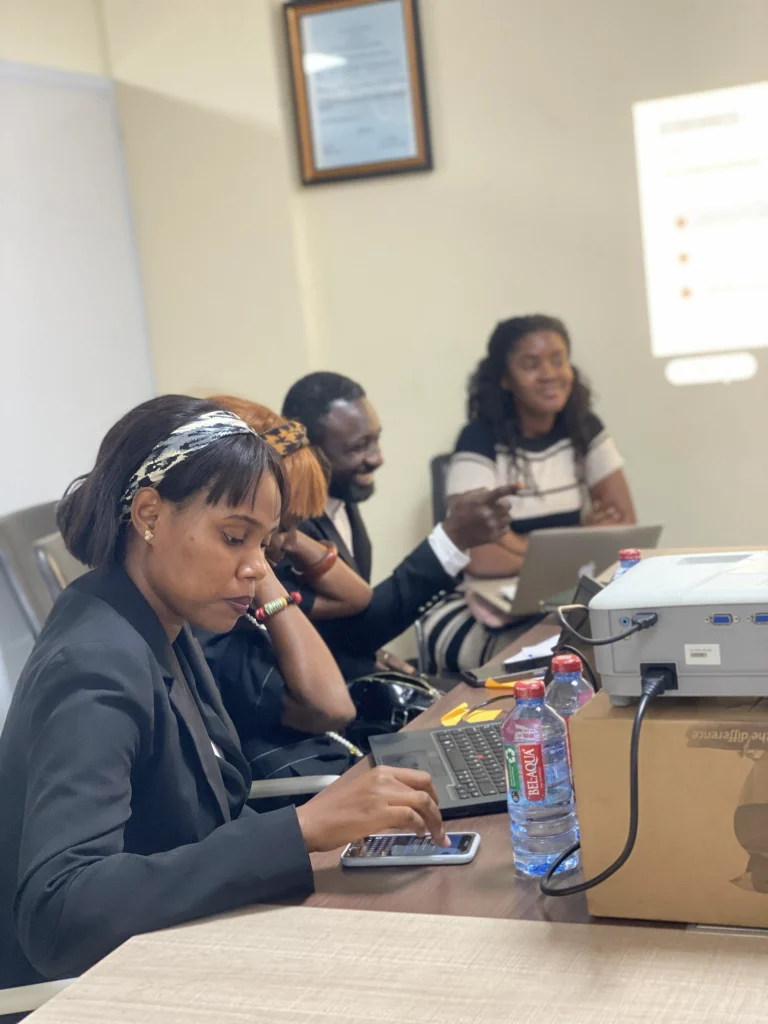
After a short break, the group sat down with lawyers from our firm for a moderated conversation grounded in real practice rather than theory. The discussion moved through what justice looks like when the system is stacked against a client, what has been most surprising about doing this work in Ghana, and what keeps a lawyer motivated in a system that often moves slowly.
Part of the conversation was set aside deliberately for groups whose rights violations rarely make headlines, persons with disabilities, stateless persons, informal workers, and others facing overlapping forms of disadvantage. The focus stayed on principles of dignity and equal protection, handled with care rather than sensation.
The final formal segment was an open Q&A, with the floor handed entirely to the interns. Questions ranged from what case had most changed a lawyer’s view of the law, to what people most misunderstand about human rights work in this part of the world, to the simple and honest question of how anyone stays motivated in a system that resists expediency.
We are grateful to Projects Abroad for entrusting us with this group and for the ongoing partnership that made the day possible. Workshops like this one sit close to why our firm does this work in the first place, not simply to explain what the law says, but to be honest about the distance that so often exists between the law on paper and the law as it is lived. We look forward to more of these conversations.